 971 503818775


johnieharwood
About johnieharwood
Interim CFO finance team leadership: three handoff checks
Interim CFO finance team leadership usually fails at the handoff, not during the engagement. The common mistake is treating the exit as a file transfer, where a departing leader sends folders and a login list. The consequence shows up a quarter later, when nobody can rebuild the close or explain the forecast drivers. Three checks, run in order, prevent that.

A handoff is a process, not a document
Most interim finance engagements end with a folder, a spreadsheet, and a short overlap week. That feels complete because the file list is tidy. What matters more is whether the work behind each file can continue without the person who built it. A handoff is the transfer of a routine, not the transfer of an output.
Make the process visible before the interim leader leaves. Ask the person who will own each task to run it while the interim leader watches and stays quiet. If they stall on a step that only exists in someone’s memory, that step needs writing down. The goal is a routine the team can repeat next month without a phone call.
The hard part is that finance routines have invisible dependencies. A reconciliation depends on a bank feed someone sorts by hand. A report depends on a cost allocation agreed in a meeting no one recorded. A payroll run depends on a bonus schedule kept in a personal file. These dependencies are the first things to break when a person leaves.
So the three checks in this guide run in a set order. You start with whether the numbers can be reproduced, move to whether the forecast can be re-run under different assumptions, and finish with who holds the authority to decide once the role ends. Each check assumes the one before it passed.
Organizations with limited internal capacity feel this most. When one person covers treasury, reporting, and payroll, there is no bench to absorb a surprise. That is exactly when an interim leader helps, and exactly when a sloppy exit hurts. The checks here are lightweight on purpose.
None of this requires new software. It requires an hour with the person doing the work and the willingness to write down what they already know. The steps below catch the gaps while someone still remembers where they are.
Check one: can the team rebuild the monthly close
Start with the close because everything downstream depends on it. Pick one recent month and ask the incoming owner to reproduce the statements from the accounting system alone, without opening the interim leader’s working files. If they can, the numbers are portable. If they cannot, you have found the problem early.
Watch where they pause. A pause usually means a journal entry posted by hand, a spreadsheet kept outside the ledger, or a balance nobody reconciled this cycle. Those gaps turn into restatement risk during a financing round or an audit, when an outside party walks the same path and stops at the same place.
Write the sequence as a short close checklist with owners. Not a policy manual, just the order of steps and who does each one. Include the boring parts: interim chief financial officer who downloads the bank statement, who reviews the payroll register, who approves the final trial balance, who signs off before it is locked.
Test it twice. Once with the interim leader nearby and once without. The second run is the real test. If it produces the same numbers, the close is repeatable. If it produces different numbers, you have found a control that only exists in one person’s head.
For organizations that follow a formal framework, ISO 9001 style process thinking helps, but the discipline holds without a certificate. The point is a documented order of operations that a competent person can follow on a normal week.
Keep the checklist current. A close that was repeatable in March can drift by June if someone starts a new workaround. The check is not a one-time event. It is a habit you build before the interim leader leaves.
Check two: does the cash forecast survive new assumptions
A cash forecast that only works with the interim leader’s assumptions is a snapshot, not a tool. Ask for the model and interim chief financial officer change one driver: push a large customer payment out by a month. If the model updates cleanly, it is built on drivers. If someone has to redo it by hand, it is not.
A driver-based forecast means the numbers come from a few inputs the business can name. Collections timing. Payroll dates. Supplier terms. Debt service. When an input changes, the output changes with it, and the person running it can explain why the cash picture moved.
Nonprofits and grant-funded groups have a version of this too. A restricted grant that arrives late changes the cash picture even when the budget is fine. The forecast has to show restricted and unrestricted cash separately, or the board will read the position wrong and make a decision on a number that was never true.
Ask for a base case and one downside case, written down. Not a range with no explanation, but two sets of assumptions someone can point to. That is what a lender or an investor will ask for anyway, and it is easier to build now than under deadline.
Then check the handoff. The person who will own the forecast after the role ends should run the next monthly update themselves, with the interim leader reviewing rather than producing. If they need help, the help should be a note in the model, not a phone call.
A forecast is only useful if it is used. If the only person who opens it is the interim leader, the tool leaves with them. Put a recurring date on the calendar and a name next to it.
Check three: who decides once the interim leader is gone
Decision rights are the check people skip, because authority is uncomfortable to map. List the recurring decisions the interim leader has been making: approving spend over a threshold, signing off on credit terms, choosing accounting treatment, hiring in the finance team. Then write down who owns each one next.
Some decisions return to the CEO. Some go to a controller or a finance manager. Some need the board or a finance committee. If two people think they own the same decision, the organization will stall at the worst moment, usually during a payment run or a lender call.
A simple table helps because it puts the answer where people can see it. Fill in the rows that match your situation, and leave out the ones that do not.
| Decision | Owner after handoff | Backup |
|---|---|---|
| Spend approval above threshold | CEO | Finance manager |
| Credit terms with suppliers | Finance manager | CEO |
| Accounting policy choice | External accountant | Finance committee |
| Hiring in finance | CEO | Finance committee |
| Bank covenant reporting | Finance manager | CEO |
Review the list with the people named. Authority that is assumed is not authority that holds. Make the process visible by writing the names next to the decisions and confirming that each person agrees to the role before the engagement ends.
This is where an interim engagement either strengthens the team or leaves it dependent. If a permanent leader arrives later, the decision map is the first document they should read. It tells them what they own before they inherit it by accident.
Run the three checks in this order
The sequence matters because each check builds on the last. You cannot test decision rights for a forecast nobody can run, and you cannot re-run a forecast built on a close nobody can reproduce. The order keeps the work honest and stops the easy parts from hiding the hard ones.
- Reproduce the monthly close from the system alone.
- Re-run the cash forecast under a changed assumption.
- Name the owner for each recurring decision.
Do them close together, ideally in the last few weeks of the engagement, while the interim leader is still available to answer questions. Running them afterward means the only source of explanation is gone, and the team is left guessing at why a step exists.
Each check produces a short written artifact: a close checklist, two forecast scenarios, and a decision table. None of them are long. What matters is that a named person can use each one without the interim chief financial officer leader in the room.
This is where you find out whether interim CFO finance team leadership transferred a capability or rented one. Both can look successful at the end of the contract. Only the handoff reveals the difference.
If a check fails, that is useful news. Fix it while help is still on hand. A failed check after the person leaves is a problem with no owner and a deadline attached.
Scope limits worth settling early in the engagement
An interim CFO who quietly takes on every open task makes the handoff harder, not easier. Write the mandate in plain language that both sides agree on, and say what the role owns, what it reviews, and what it does not touch.
Most confusion comes from mixing up three things: support, oversight, and authority. An interim leader can support a forecast, oversee a close, and still have no authority to approve a payment or sign a bank document. The team needs to know which of the three applies to each task before the work starts.
Write the limits into a short memo while the engagement is active, when everyone still remembers the reasoning. Name the decisions that require the interim leader’s approval, the reports they own outright, and the ones they only review before someone else signs.
A few items cover most of it:
- Decisions that need the interim leader’s approval, and the threshold where that stops.
- Reports the role prepares, and reports it only reviews.
- How much of the week goes to routine work and how much to strategic projects.
- The end date, and what the team should be able to do without the role by then.
- Which outside parties, such as lenders or auditors, deal directly with the interim leader.
Scope changes as priorities change, and that is normal. A financing round, a system migration, or a new grant can pull the interim leader toward one area and away from the routine. When that happens, say so in writing and name what will get less attention, so the shift is a decision rather than a surprise.
The limits also protect the interim leader from a common trap: becoming the person who does everything. When the mandate says the role exists to build a routine a permanent hire can run, stepping back to watch someone else do the work counts as progress, not negligence.
A vague arrangement feels comfortable for a few weeks and turns awkward later, when two people believe they own the same call. Settling the limits early gives the handoff checks something concrete to test against, instead of an understanding everyone remembers differently.
Keep the memo short enough to read in one sitting. A one-page summary of who owns what will get used; a long policy document gets filed and forgotten. Deciding these limits up front is easier than deciding them in the final week, when the choice starts to feel personal.
What the first 30 to 90 days should produce
The checks are easier to pass if the engagement was set up to pass them, which starts with what the interim leader delivers early. In the first month, the useful output is a clear picture of priorities, not a polished strategy deck nobody uses.
By day 30, the finance team should know which reports matter and which are habit. By day 60, the cash forecast should be running on a monthly cycle with a named owner. By day 90, the close checklist and the decision table should exist in draft, so the handoff becomes a review rather than a scramble in the final week.
Watch for scope creep in the other direction too. An interim leader who absorbs every task personally creates the dependence the engagement was meant to remove. The measure is how much the team can do without them, not how much they personally fixed.
Ask for a short written update each month that names what changed and what is still open. It does not need to be formal. It needs to be specific enough that a board member could read it and know where things stand and what to ask next.
Some organizations need the interim leader to focus on a financing process or a transaction, and the day-to-day routine gets less attention. That trade-off is worth naming out loud. If the transaction is the priority, say so, and plan for the routine handoff to happen after it closes.
Being explicit about the timeline avoids a common disappointment: expecting a full handoff and a completed transaction from the same weeks of work. Deciding which comes first is a leadership choice, not a finance one.
How the checks change by company stage and sector
A company raising its first institutional round needs different things from a family business replacing a retiring controller. The three checks stay the same; what changes is how much detail each one needs and how quickly it has to be done before a decision lands.
Earlier-stage companies often have one person handling finance alongside other work. There, the close checklist may be five steps long and the forecast may run on three drivers. The point is not sophistication. It is that the routine exists in a form someone else can run next month.
Sectors shape the risk. A subscription business lives on deferred revenue and retention assumptions, so the forecast check leans on revenue recognition under ASC 606. A distributor lives on inventory and supplier terms, so working capital drives the cash picture more than profit does.
Nonprofits add funder restrictions and grant timing, which affects both the close and the forecast. A service company with a few large customers may have concentration risk that belongs in the forecast assumptions, not buried in a footnote nobody reads at the board meeting.
Each sector has a small number of drivers that matter, and the checks should target those instead of covering everything. A long checklist that tests the wrong things gives false comfort and uses up the attention the team needs for the real gaps.
There is no universal template that fits every case. Adapting the checks is not cutting corners; it is matching the effort to the risk that actually exists in that organization at that stage.
How to judge progress without assuming results
Judge an interim finance engagement by what the team can do without the interim leader, not by how busy the leader seems. Busy is easy to see and tells you very little about whether capability stayed behind.
Progress shows up in small, checkable things. The same person closes the books two months in a row and gets the same answer. The monthly forecast update takes less of the team’s time than it did, and whoever runs it can explain which driver moved. Questions to the interim leader change shape, from ”how do I do this” to ”here is what I did, does it look right.”
Signals worth watching:
- The close runs on its usual date without a reminder from the interim leader.
- The forecast update is completed by someone other than the interim leader.
- The decision table has a name in every row and no blanks.
- Board or lender questions get answered from a document the team maintains.
- New problems get a first attempt before anyone asks the interim leader.
A team can also look calmer simply because someone senior is answering the phone. That comfort is real, and it disappears with the engagement. Test capability directly by asking a person to run a task while the interim leader stays out of the room, then review the result together afterward.
Set the review on a schedule rather than leaving it to the exit conversation. A short written update each month, a midpoint review with whoever sponsors the engagement, and a final review built on the three handoff checks give you three honest looks at the same question.
Not everything can be measured this way, and being honest about that helps. If the main job was preparing for a financing conversation, the routine work may well have moved more slowly, and someone should say so out loud rather than let it read as neglect.
Look for a trend, not a perfect score. A team that needed help with every step in the first month and handles most of them by the last one is on the right path, even if a few gaps stay open when the interim leader leaves.
Keep the evidence in one place. A folder with the close checklist, the forecast scenarios, the decision table, and the monthly updates is enough for a permanent hire to see what changed, what is still open, and who was responsible for each piece.
A worked example of the three checks
Picture a mid-sized distribution company in Ohio that lost its controller and brought in an interim CFO for a few months. Revenue is steady, but the close takes three weeks and interim chief financial officer the cash forecast is rebuilt by hand each month. Here is how the checks play out, in order.
First, the close. The incoming accounting lead tries to reproduce last month from the ledger alone. Two journal entries turn out to be spreadsheet adjustments posted by hand, and a bank account was never reconciled. Writing those into a checklist turns the close into a documented ten-step sequence with a name next to each step.
Second, the forecast. The model is opened and one driver changes: a major customer’s payment slips by a month. The spreadsheet does not update, because the collections line is hard-coded. Rebuilding it around named drivers lets the new owner re-run it and produce a downside case the bank can read.
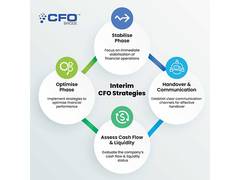
Third, the decisions. The interim CFO has been approving nearly all spend, which the team assumed was normal. The table assigns routine approvals to the CEO and larger commitments to the finance committee. Each person confirms their role in writing before the engagement ends, so nothing is left to memory.
None of this guarantees a smooth transition, and the next quarter still brings surprises. What it does mean is that when the permanent finance leader arrives, the team can close the books, run a forecast, and point to who decides what. The process is visible, and the dependence on one person is gone.
No listing found.